Shawn
September 28, 2026
Perforated window vinyl (also called one-way vision vinyl or window perf) is a printable vinyl material with thousands of tiny evenly-spaced holes punched across its surface. From the outside, the holes are hidden behind full-color printed graphics. From the inside, light passes through the holes to maintain a clear view outward. It is used on storefront windows, vehicle rear windows, and interior glass partitions to display large-format brand graphics without blocking interior visibility or natural light. Unique Print NY at 242 West 36th Street, New York, NY 10018 prints perforated window vinyl for NYC businesses. Call (212) 420-9198 Monday–Friday 9AM–5PM.
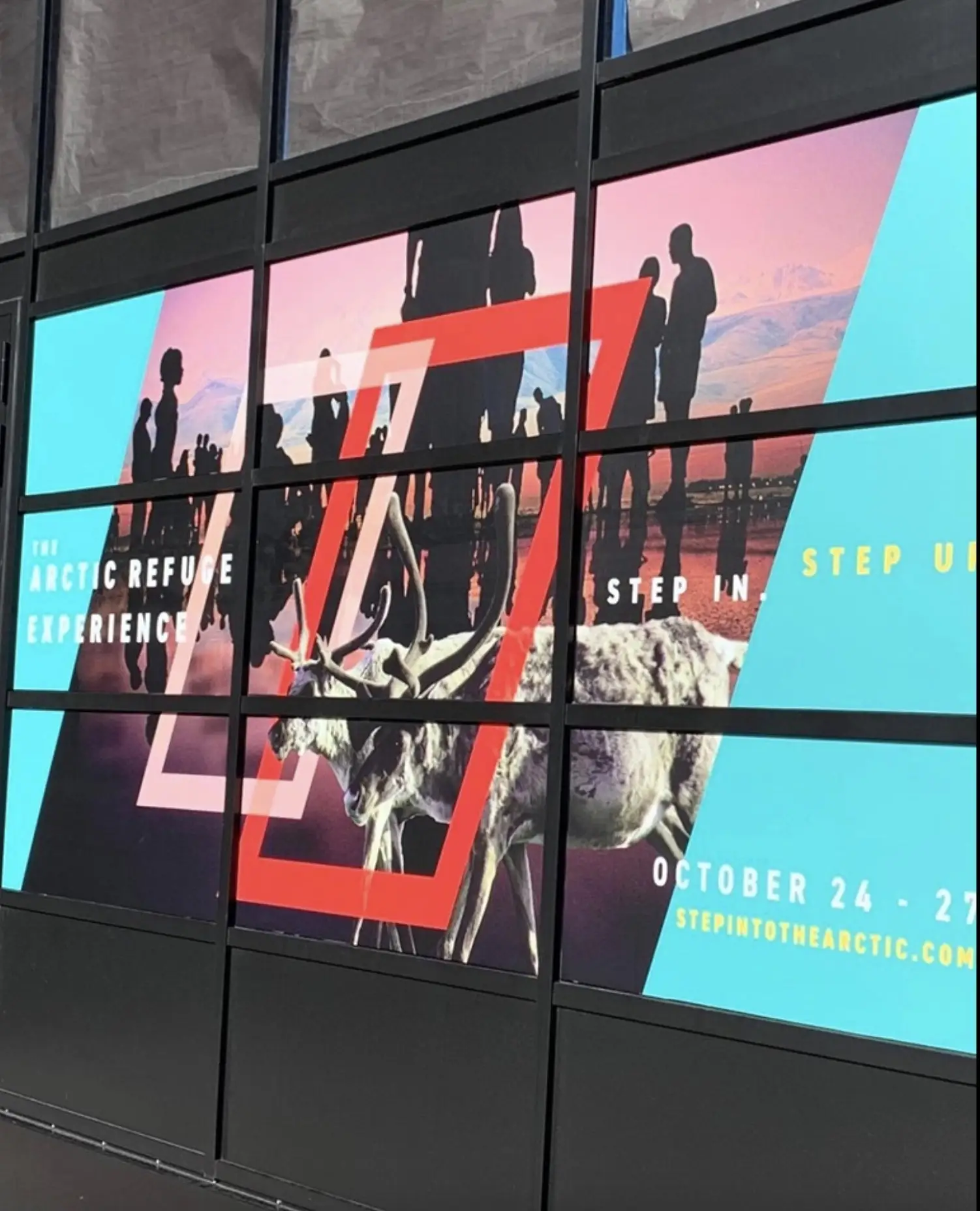
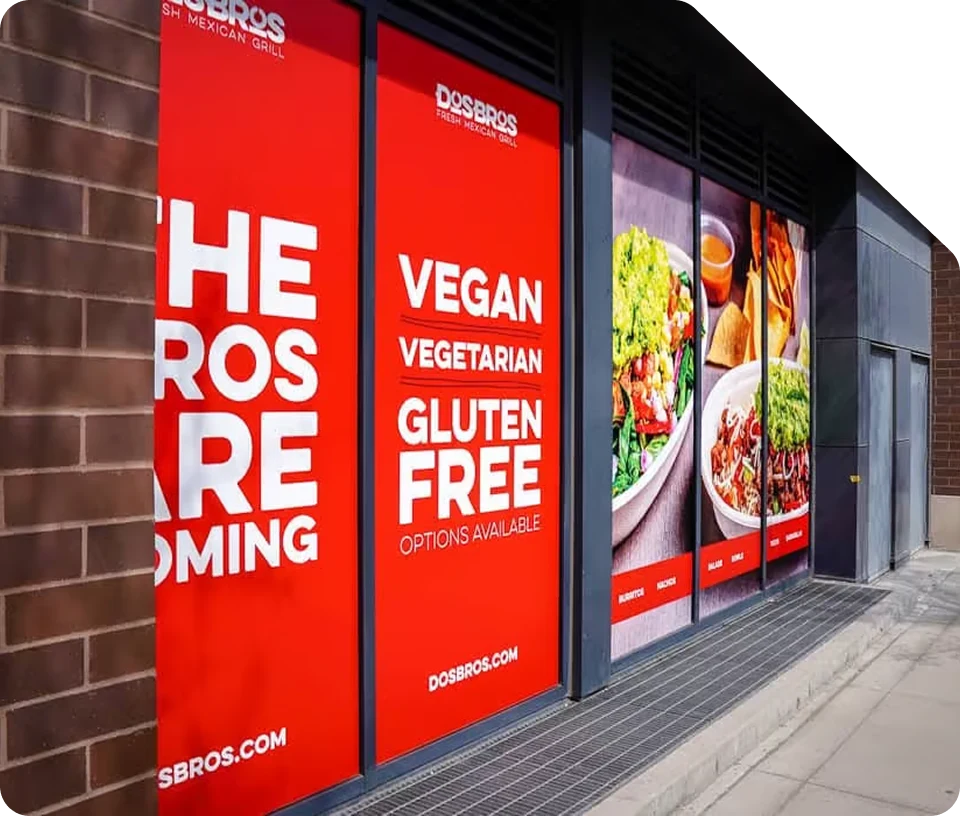
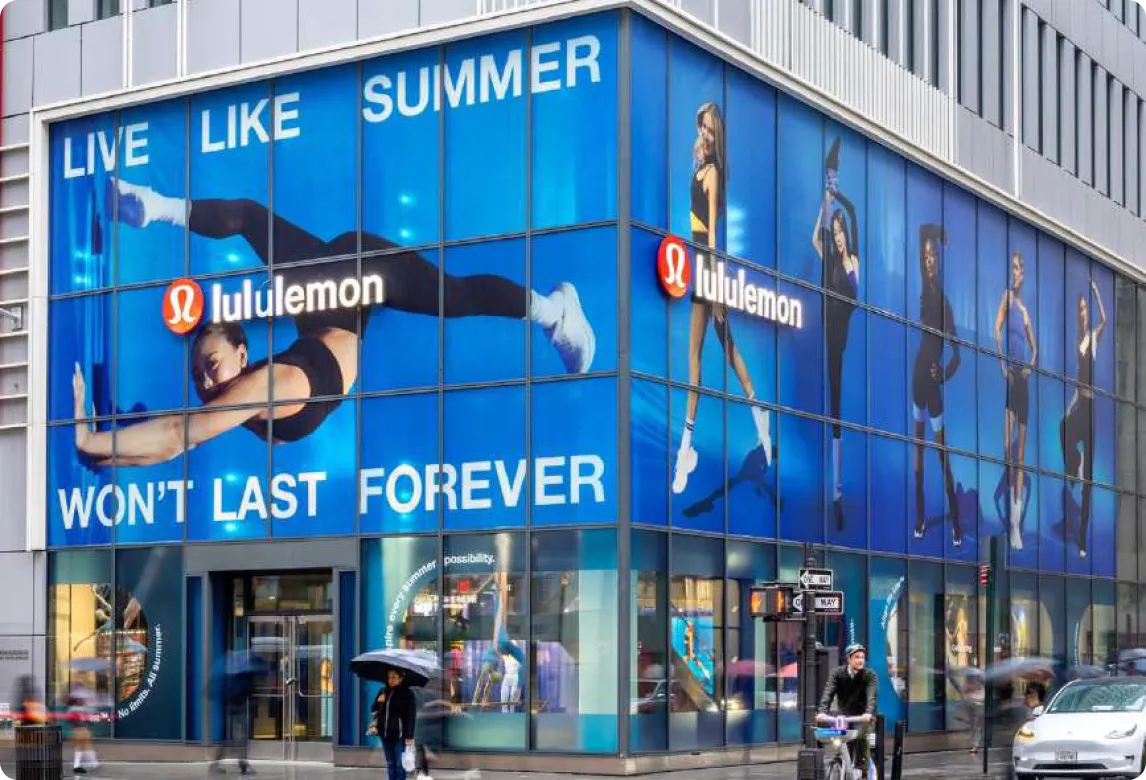
Walk down any commercial block in Manhattan, SoHo, or Williamsburg and you will see it on storefront windows — bold photography, brand graphics, promotional campaigns — displayed at full scale across an entire pane of glass without darkening the interior behind it. That material is perforated window vinyl, and it is one of the most effective and versatile large-format print applications available to NYC businesses.
The effect looks almost like a one-way mirror for graphics: a vivid full-color image visible to every pedestrian passing by, while people inside look right through it. If you have ever wondered exactly how it works — and whether it makes sense for your storefront, vehicle fleet, or office glass — this guide covers everything: the material itself, how the perforation rating affects visibility and print quality, which applications it is designed for, and where its limitations are.
Unique Print NY at 242 West 36th Street in Midtown Manhattan prints perforated window vinyl for storefronts, retail shops, restaurants, vehicles, and commercial spaces across all five boroughs, as part of our full range of window graphics in NYC.
What Is Perforated Window Vinyl?
The Material Explained
Perforated window vinyl is a self-adhesive vinyl film manufactured with a regular grid of tiny round holes punched across its entire surface. The holes are spaced precisely — typically between 1.5mm and 2.5mm apart — to create a specific ratio of solid material to open space. That ratio is the perforation rating, expressed as two numbers: 50/50, 60/40, or 70/30.
The first number is the percentage of solid material — the surface that gets printed on and carries the graphic. The second number is the percentage of open holes — the portion that lets light and visibility through. A 50/50 perf is half solid, half open holes. A 60/40 is 60% solid with a slightly smaller hole area. A 70/30 is 70% solid and is typically chosen when maximum graphic impact matters more than interior visibility.
Why it creates “one-way vision”: The directional visibility effect is a product of light physics, not a coating or tint. In daylight, the ambient light reflecting off the printed surface is dramatically brighter than the light coming through the holes from inside the building — so the eye reads the graphic, not the perforation grid. From inside, the reverse is true: interior light levels are similar to or brighter than the graphic surface, so the eye looks through the holes and perceives a clear — if slightly textured — outward view. At night, when interior lighting exceeds exterior, the one-way effect partially reverses: those inside can see out less clearly, and people outside may see into the lit interior through the holes.
Common ratings: 50/50 · 60/40 · 70/30
One-way effect works in daylight — partially reverses at night with interior lighting
50/50 vs. 60/40 vs. 70/30 — Which Perforation Rating to Choose
The perforation ratio is the most consequential specification decision when ordering perforated window vinyl. Here is how each rating performs and when each is the right choice:
| Rating | Solid / Open | Interior Visibility | Graphic Richness | Best For |
|---|---|---|---|---|
| 50/50 | 50% solid · 50% open | ★★★★★ Excellent — nearly unobstructed | ★★★☆☆ Good — slightly lighter colors | Storefronts where interior light and outward visibility are equally important · restaurants · showrooms |
| 60/40 ★ | 60% solid · 40% open | ★★★★☆ Very good — subtle grid pattern only | ★★★★☆ Very good — richer colors, stronger graphic impact | Most popular all-around choice · storefronts, vehicle windows, office partitions · best balance of both priorities |
| 70/30 | 70% solid · 30% open | ★★★☆☆ Moderate — visible grid, reduced outward view | ★★★★★ Excellent — vivid, high-contrast graphics | Vehicles · privacy glass · applications where graphic impact is the clear priority |
For most NYC retail storefronts, the 60/40 perforation hits the best balance. Graphic quality is strong enough to read clearly from the sidewalk at the pace of Midtown or SoHo foot traffic, while interior visibility remains comfortable for staff and customers. Choose 50/50 if your space relies on natural light or if your interior display benefits from street visibility (jewelry, gallery, food display cases). Choose 70/30 for vehicle rear windows, where maximum graphic impact is the goal and driver visibility requirements are met through design placement.
When to Use Perforated Window Vinyl — The Right Applications
Perforated window vinyl is not the right material for every window application — there are cases where solid vinyl, frosted film, or clear vinyl is a better choice. Here is a clear breakdown of where window perf excels:
★ The Primary Use Case
The most common application in New York City: a full-bleed brand image, seasonal promotion, product campaign, or event graphic covering an entire storefront window. Perforated vinyl lets the business occupy its full window with a graphic without darkening the interior or severing the visual connection between the street and the space inside. Especially effective on high-foot-traffic blocks where the window is the primary marketing surface — retail shops, restaurants, boutiques, salons, and pop-up activations all benefit significantly.
Fleet Graphics and Wraps
Perforated window vinyl is the standard material for vehicle rear windows and side glass. It lets the driver maintain rearward sightlines while covering the glass with a brand graphic, fleet wrap element, or promotional message. Commonly used on delivery vans, food trucks, shuttle buses, and commercial vehicles operating across NYC. For vehicle applications, 60/40 or 70/30 are most common — 50/50 can read as too light on moving vehicles at normal viewing distances.
Privacy with Preserved Light
Interior office glass — conference room walls, lobby partitions, corridor windows — benefits from perforated vinyl when some visual separation is needed without fully blocking light or sightlines. A 50/50 or 60/40 perf printed with a subtle brand pattern, company values statement, or decorative graphic gives the glass visual texture and privacy without making the space feel enclosed. Popular in NYC co-working spaces, creative studios, and law firms that want branded interiors without sacrificing the open-plan light that defines their aesthetic.
Ambiance Without Darkness
Restaurants face a particular tension with window graphics: a covered window creates street presence and brand identity, but a darkened interior reads as uninviting. Perforated vinyl resolves the conflict directly. A 50/50 perf lets a dining room feel naturally lit and warm from inside while displaying a full menu graphic, brand mural, or seasonal campaign on the street-facing glass. This is the reason you see it on so many Manhattan restaurant windows — it solves a real hospitality and design problem simultaneously.
Removable and Damage-Free
Pop-up shops, seasonal retail activations, and temporary brand takeovers in NYC use perforated window vinyl for the same reason permanent retail does — it covers the window completely without making a dark box of the interior — with one additional advantage: it removes cleanly without leaving adhesive residue on the glass. Critical for leased NYC retail spaces where landlords require window glass to be returned to original condition at the end of an activation term.
Activates Dead Storefronts During Build
Construction-phase storefronts and hoarding barriers with glass panels are a near-constant feature of NYC’s streetscape. Perforated vinyl turns dead, papered-over windows into active marketing surfaces — announcing the coming business, displaying brand imagery, or carrying construction timeline information — while letting any existing interior visibility (safety lighting, construction activity) remain partially visible from the street. Common in SoHo, Meatpacking, and neighborhoods with high volumes of restaurant and retail renovation activity.
When NOT to Use Perforated Window Vinyl
Knowing where perforated vinyl is the wrong choice saves time, budget, and installation headaches. Here are the applications where a different material will serve you better:
Limitations of Perforated Vinyl
You need complete privacy. Perforated vinyl provides directional visual separation in good daylight conditions — it is not a privacy solution at close range, at night, or when interior lighting is significantly brighter than the exterior. If true visual privacy is the objective — a medical office exam room, a changing area, a private meeting space — frosted or opaque solid vinyl is the correct material.
The design has very fine detail or small text. The perforation holes create a physical dotted structure in the printed surface. Fine lines thinner than approximately 2–3 points and text smaller than about 1 inch in printed height can break up visually against the perforation grid. Perforated vinyl is optimized for bold graphics, large photography, and large-format typography — the kind of imagery that reads cleanly from 10 to 30 feet. If your design includes intricate small detail, consider solid vinyl window decals or cut vinyl lettering for those elements.
The window will be brightly backlit at night. Interior lighting reverses the one-way effect. A brightly illuminated interior turns perforated window vinyl from a graphic display into a light-diffusing scrim — the image washes out, and the holes become visible from outside. Businesses operating primarily in the evening hours (bars, late-service restaurants, clubs) should factor this in when deciding whether window perf is appropriate, or plan graphic placement accordingly.
You need fully opaque coverage with zero light pass-through. If the goal is complete blackout — renovation coverage, storage concealment, or a fully opaque window treatment — solid opaque vinyl achieves this at lower material cost per square foot than perforated film.
Perforated Window Vinyl vs. Other Window Graphic Materials
Perforated vinyl is one of five distinct window graphic materials used in large format printing — each designed for a different purpose. Here is how they compare:
| Material | Interior Visibility | Print Quality | Privacy Level | Best Application |
|---|---|---|---|---|
| Perforated Vinyl | Good to excellent (rating-dependent) | Very good | Low — directional only | Full-window storefront graphics · vehicle rear windows · restaurant windows |
| Clear Vinyl | Full — unobstructed | Excellent | None | Floating logo effect · subtle door graphics · interior-facing branding |
| Opaque Solid Vinyl | None — fully blocked | Excellent | Complete | Blackout coverage · renovation windows · areas needing full opacity |
| Frosted / Etched Glass Vinyl | Diffused — visible shapes, not detail | Texture only — not photo-print | Medium — diffuses view | Conference room privacy · decorative glass · branded etched-glass patterns |
| Static Cling | Full through non-printed areas | Good | None | Removable interior-facing signage · seasonal promotions · no-adhesive applications |
Design Tips for Perforated Window Vinyl
Because perforated vinyl has a physical hole structure, a few design decisions that work on other print materials need adjustment for window perf. Here is what to keep in mind:
- Design for viewing distance — not screen resolution
Window perf is a large-format medium viewed from the sidewalk at 5 to 30 feet. Design with that distance in mind: bold imagery, large typography (minimum 2–3 inches for any text that needs to be legible at street level), and high-contrast color combinations. Details that look crisp on a monitor become invisible at sidewalk distance on a 48-inch-wide window. - Avoid very fine lines and small text
Lines thinner than approximately 2–3 points and text smaller than about 1 inch in printed height are at risk of visually breaking up against the perforation grid. If small text or fine detail is essential, place it on a solid background color block within the graphic — the concentrated solid area provides better legibility even on perf. - Use full-bleed photography and bold graphics confidently
Large-scale photography, gradient backgrounds, and bold brand color fields work beautifully on perforated vinyl. The perforation grid is essentially invisible in these contexts at normal viewing distance. Photographic portraits, food imagery, product shots, and brand color campaigns are ideal subject matter for window perf — lean into large, confident graphic choices. - Account for slight color lightening on the 50/50 rating
Because a portion of the vinyl surface is open holes rather than printable material, colors print slightly lighter on perf than they would on solid vinyl — particularly on the 50/50 rating. For color-critical applications or brand color matching, request a printed proof or consult with your print provider. On 60/40 and 70/30, the color density difference is less pronounced and generally not significant at viewing distance. - Deliver files at the correct resolution for large format
Submit print-ready artwork at 100–150 DPI at final output size, or 300 DPI at a proportionally reduced scale (commonly 1:10 for very large windows). Vector elements and logos should be embedded as native vector objects. Provide a print-ready PDF with bleed extended 0.125″ beyond the trim edge if the graphic runs to the edge of the panel. - Provide accurate window measurements and account for the frame
NYC storefronts often have painted metal frames, architectural molding, or structural elements bordering the glass. Design the graphic with the full window in context: does the image need to fill edge-to-edge to the frame, or is a bordered panel appropriate? Provide accurate width and height dimensions when ordering, and clarify whether the installation calls for a full-bleed cut panel or a border reveal.
Installation: What to Know for NYC Storefronts
Practical Notes for NYC Buildings
Exterior vs. interior installation: Perforated window vinyl can be installed on the exterior or interior surface of the glass. Exterior installation places the graphic outward-facing and is standard for storefronts — the adhesive bonds directly to the exterior glass surface. Interior installation is preferred when building management rules or lease terms restrict modifications to the exterior facade. With interior installation, the printed surface faces inward and the perforated film faces out — the one-way visual effect works correctly from the street in either orientation, but the graphic surface is protected from weather and vandalism when installed inside.
NYC building and lease considerations: Before ordering perforated window vinyl for a NYC commercial space, confirm with your landlord or building management that window graphics are permitted under your lease terms. Some Midtown office towers, co-op buildings, and properties in landmark-designated districts have restrictions on exterior window modifications. Most standard commercial retail leases in NYC permit window graphics — but confirm before ordering a custom print run.
Removal: Perforated window vinyl is designed for clean removal without adhesive residue under normal conditions. Removal is easiest within the first 2–3 years of installation; very long-duration installs may require more effort to remove cleanly. For temporary activations and seasonal campaigns, the residue-free removal characteristic is one of the primary advantages of perforated vinyl over other window treatments.
Temperature and weather for NYC exterior installs: Perforated window vinyl should be applied in temperatures above 50°F for proper adhesive activation. Spring and fall are ideal installation seasons in New York. Direct installation on wet glass or in temperatures below freezing should be avoided; if a winter installation is required, ask your print provider about low-temperature adhesive options before ordering.
Frequently Asked Questions
Perforated Window Vinyl Printing in NYC — Any Size. Any Rating. Fast Turnaround.
Unique Print NY prints perforated window vinyl for storefronts, restaurants, offices, and vehicle fleets across New York City. We print 50/50, 60/40, and 70/30 perforation ratings at any custom size with full-color graphics and complimentary prepress review. Local pickup in Midtown Manhattan or delivery across the five boroughs.
242 West 36th Street, New York, NY 10018 · (212) 420-9198 · Mon–Fri 9AM–5PM
Shawn
September 28, 2026