Adam Greenberg
June 30, 2026
Our Top Tips To Make An Impression At a Trade Show
Walk the floor of any major trade show in New York City — the Javits Center, Pier 94, the New York Hilton — and you’ll notice something immediately. Most booths look the same. Generic retractable banners with a logo on top and bullet points below. White tablecloths. A stack of the same tri-fold brochure that has existed in some form since 2009. A bowl of branded pens.
And then, occasionally, a booth that stops you. Not because it’s the biggest booth on the floor or the loudest. Because something about the print — the scale of the backdrop, the quality of the paper in the brochure, the precision of the brand colors across every surface — communicates a level of investment and intention that everything around it does not.
That difference is almost entirely a print decision. The booth structure, the table, the carpet — those are often determined by the venue. What exhibitors control is the print. And the difference between a forgettable booth and one that generates real conversations, real leads, and real follow-up is almost always in the printing choices.
At Unique Print NY, we’ve helped hundreds of NYC exhibitors transform their booth presence through strategic print decisions. These are the seven strategies that make the biggest difference — not in theory, but in practice, on the show floors of New York City’s busiest trade show venues.
Why Print Is Your Most Powerful Booth Tool
Before the seven strategies, it helps to understand why print has such outsized impact at trade shows compared to other booth elements.
First Impressions Form in Seconds
The Attention Window
Attendees walking a trade show floor decide whether to stop at a booth within 3–5 seconds of visual contact. That decision is made almost entirely based on what they see — which means your large format print is doing the work of your entire sales pitch before a conversation begins.
Print Communicates Quality Through Touch
The Haptic Signal
The weight of a brochure, the texture of a soft-touch laminate cover, the thickness of a premium business card — these physical qualities communicate brand quality before the reader processes a single word. A flimsy brochure signals a flimsy brand. A premium printed piece signals a premium offering.
Most Competitors Under-Invest in Print
The Opportunity
The majority of trade show exhibitors treat print as a commodity — ordering the cheapest banner and the standard tri-fold without strategic thought. This means that a modest investment in print quality immediately differentiates your booth from the majority of competitors on the floor.
Print Extends Your Reach Beyond the Show
The Post-Show Asset
A beautifully printed brochure or booklet that goes home with a prospect continues working for your brand for weeks or months after the show closes. A digital interaction at your booth ends when the attendee walks away. A physical printed piece stays on their desk, in their bag, or on their shelf.
The 7 Strategies
Highest Single Impact Change
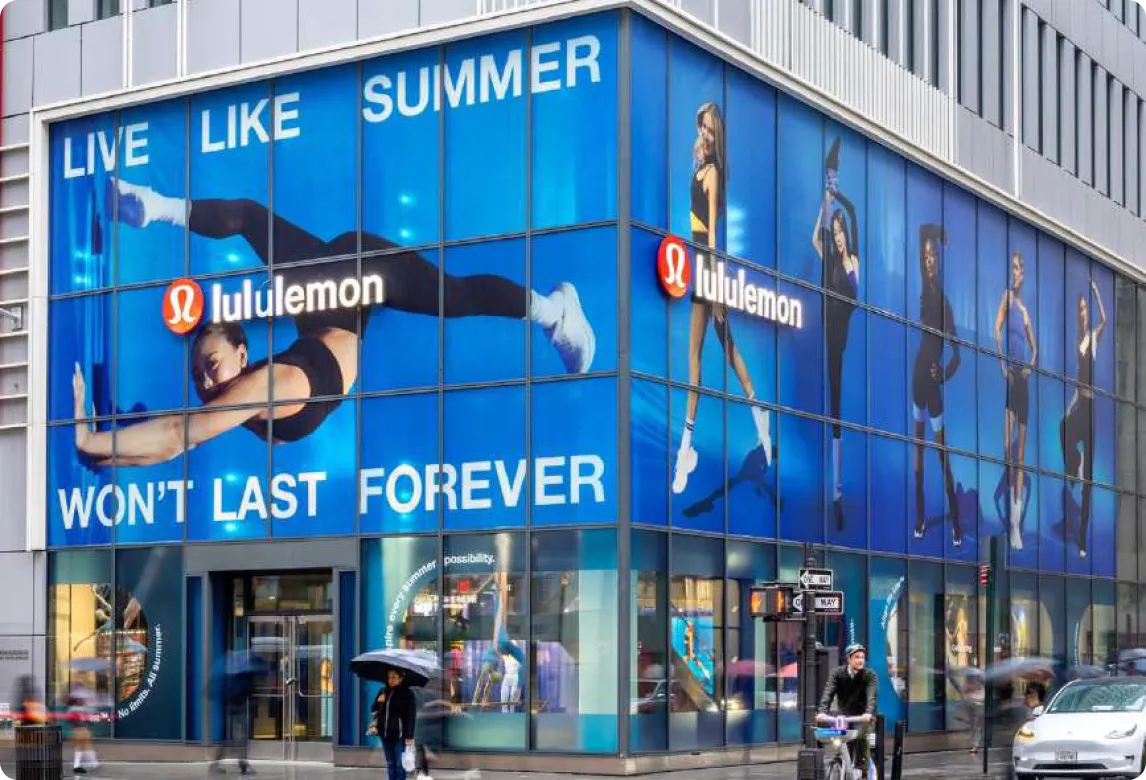
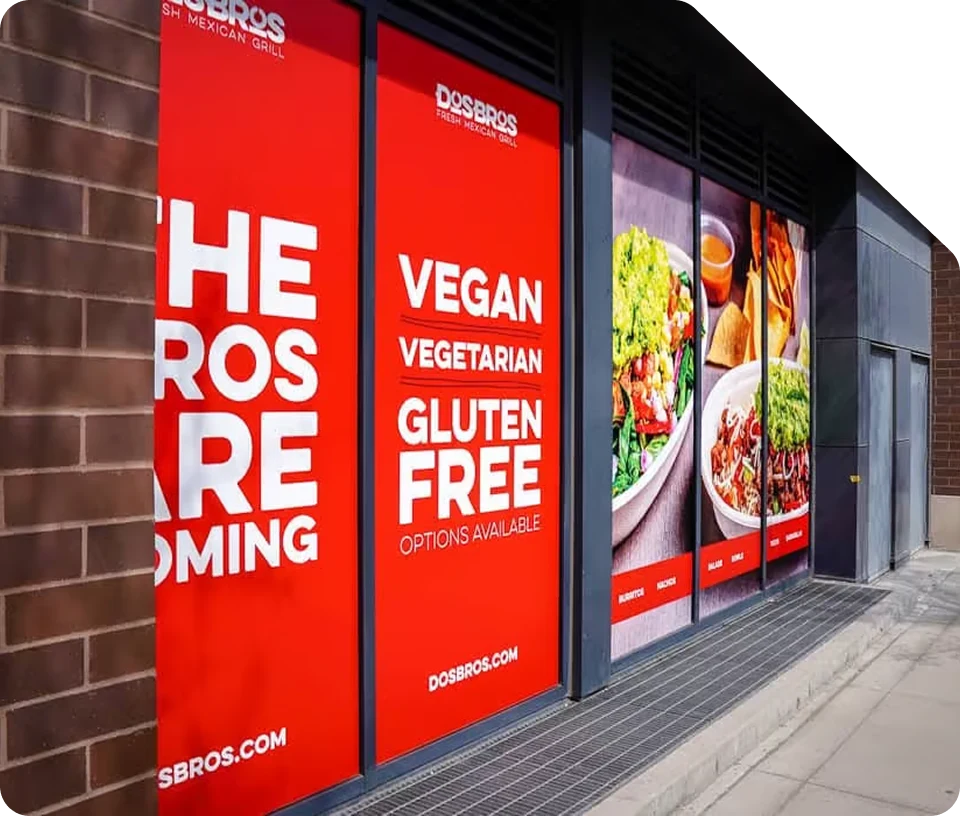
The most common trade show booth mistake is placing a large company logo at the top of the backdrop with nothing else significant to say. A prospect walking past your booth doesn’t know who you are — and “CompanyName” tells them nothing about why they should care.
The most effective booth backdrops lead with a specific, benefit-driven headline that answers one question instantly: “What do you do, and why should I stop?”
Weak backdrop headline: “Acme Print Solutions” (name only — tells nobody anything)
Strong backdrop headline: “Custom Magazine Printing in NYC — Starting at 25 Copies” (specific, clear, immediately useful)
Even stronger: “Print That Gets You Noticed — NYC Magazine & Trade Show Printing Since [Year]” (benefit + credibility anchor)
Your logo should still appear — but secondary to the headline, not instead of it. The headline earns the stop; the logo confirms who’s making the offer.
Implementation at Unique Print NY: Booth backdrops printed at 100–150 DPI at final size, in CMYK on premium fabric or vinyl. Standard sizes: 8′ × 8′, 10′ × 8′, 8′ × 10′. Call (212) 420-9198 to discuss your backdrop design approach before briefing your designer — our team can advise on what’s working on NYC show floors right now.
Highest ROI Per Dollar Spent
If there’s one print upgrade that generates the most immediate, noticeable brand impression relative to its cost, it’s applying a soft-touch matte laminate finish to your brochure cover, your booklet cover, or your business cards.
Soft-touch laminate creates a velvety, suede-like surface that is immediately and viscerally distinctive. When someone picks up your brochure at a busy trade show and feels that texture, something registers before they’re consciously aware of it: this is different. This is premium. This brand invests in quality.
Where to apply it:
- Saddle-stitched booklet cover — maximum impression for your most important leave-behind
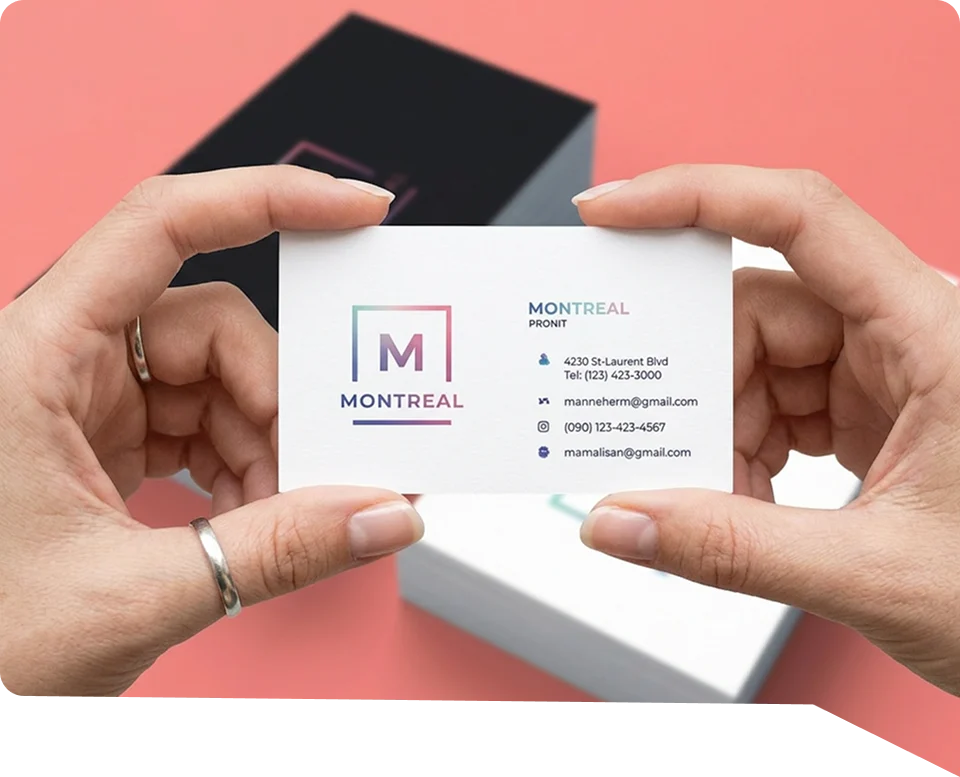
- Business cards — the item most likely to be held, examined closely, and compared to others in a stack
- Promotional postcards — elevates a typically disposable item into something worth keeping
The contrast strategy: Consider printing your main interior brochures on standard gloss stock for cost efficiency, and producing a smaller quantity (100–150 copies) of a premium version with soft-touch laminate reserved for the most promising booth conversations. Reserve the premium version for prospects who represent genuine high-value opportunities — and watch how people respond to it differently.
Display Architecture
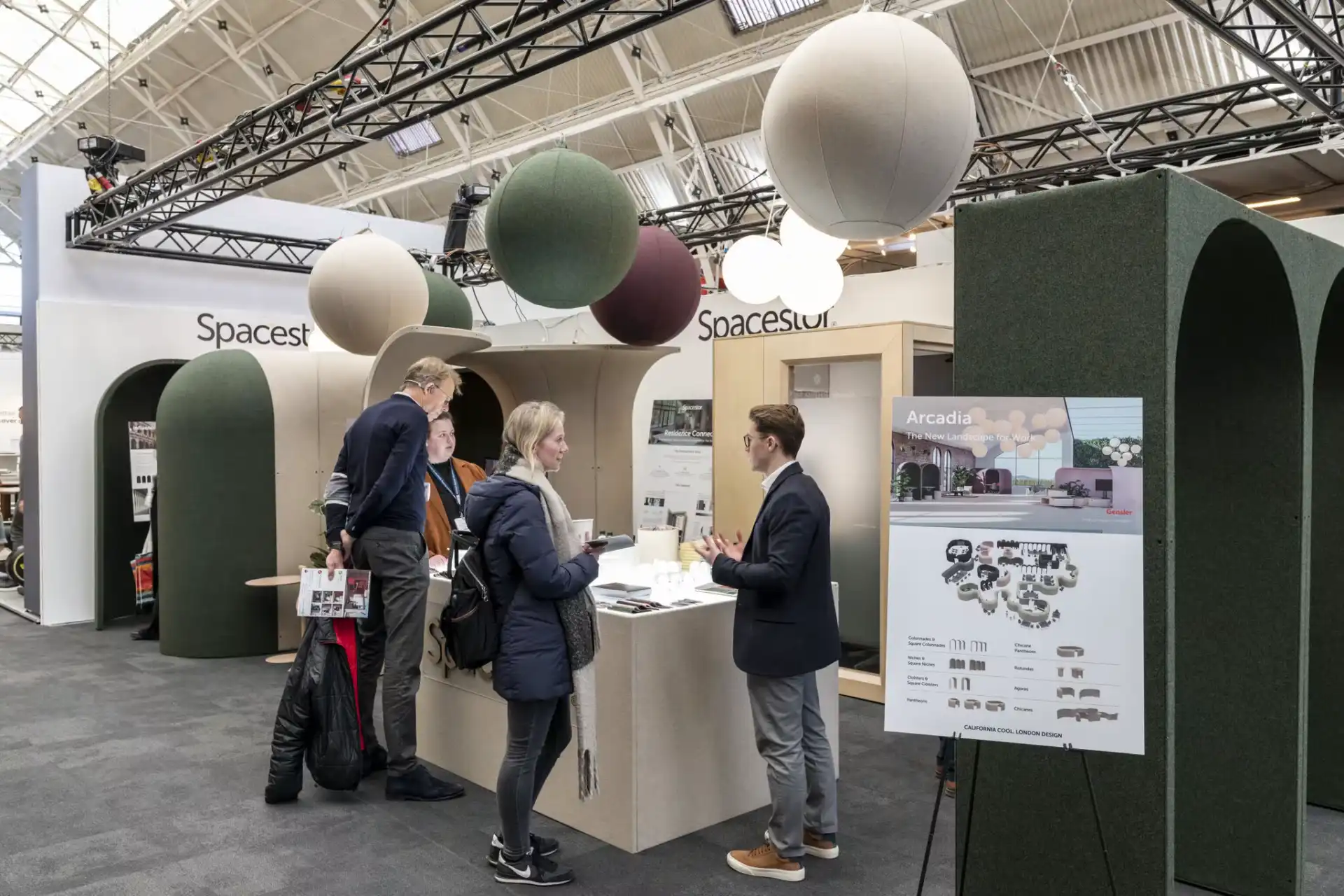
The most visually compelling trade show booths use print to create a deliberate vertical hierarchy — a layered visual structure that draws the eye from the highest point down to the table level, communicating different messages at each level and guiding prospects naturally from awareness to engagement.
The three-level hierarchy:
Level 1 — Overhead / High (6–8+ feet): Booth backdrop or tall retractable banners. This is the awareness level — visible from across the aisle, carrying your headline and primary brand message. Maximum font sizes. Minimal copy. One message only.
Level 2 — Mid-Level / Eye Level (4–6 feet): Foam board displays on easels, medium-height retractable banners, mounted case studies or product photography. This is the engagement level — readable at conversational distance, communicating specific products, key benefits, or proof points. More detail than Level 1, but still restrained.
Level 3 — Table Level (30–36 inches): Brochures, business cards, postcards, promotional items, product samples. This is the conversion level — materials that go home with a prospect, carry detailed information, and drive follow-up action after the show.
Why this works: A prospect approaching your booth naturally scans from high to low as they get closer. If each level communicates a progressively more detailed message — awareness → engagement → conversion — the visual journey mirrors a sales funnel. By the time someone reaches your table, they’ve already processed your headline and your key proof point. The conversation starts at a more advanced stage.
Brand Coherence
One of the most common and most damaging trade show booth mistakes is color inconsistency across printed pieces. The backdrop was printed six months ago by one vendor. The brochures were printed last week by another. The business cards are from a third supplier. Each looks fine individually — but when they’re all together in one booth, the brand navy on the backdrop looks slightly different from the brand navy on the brochure, which looks slightly different from the navy on the business card.
Attendees notice this even when they can’t articulate why. The subliminal message is inconsistency — and in a brand context, inconsistency signals lack of attention to detail.
How to achieve color consistency:
- Define your brand colors in CMYK values — not RGB or hex codes. CMYK values are the only color specification that translates directly to print. If your brand guide only specifies RGB or hex, convert to CMYK before briefing any printer.
- Use a single print supplier for all booth materials when possible — printing everything through Unique Print NY means all your materials are produced on the same equipment with the same color calibration, eliminating cross-vendor inconsistency.
- Request a color proof on your primary brand color before approving a full run of any new print item — especially large format pieces where color variation is most visible.
- Reprint outdated materials — if your backdrop is from a previous season and your current brochures were printed recently, there’s a strong chance they don’t match exactly. Consistency is worth the reprint cost.
Multiplies Your Reach Beyond the Show Floor
A step-and-repeat banner — a large backdrop featuring a repeating pattern of your logo — is one of the most strategically underused print assets at trade shows. Its primary function isn’t visual display within your booth. It’s brand placement in every photograph taken in front of it.
Why it matters: At a major NYC trade show, dozens to hundreds of photographs are taken at and around active booths every day — by attendees, speakers, journalists, social media managers, and influencers. A step-and-repeat banner ensures that your brand appears in every one of those photographs — on LinkedIn posts, Instagram stories, Twitter feeds, and press coverage from the event.
The economics: A step-and-repeat banner costs a few hundred dollars to produce. A single LinkedIn post from a respected industry voice, featuring your logo in the background of their event photo, potentially reaches tens of thousands of people in your target market — at no additional cost. The ROI is genuinely remarkable relative to the investment.
Design considerations:
- Logos should be repeated in a diagonal or horizontal grid at consistent spacing
- High contrast between logo and background ensures logos read clearly in photographs taken under variable event lighting
- Standard sizes: 8′ × 8′ and 8′ × 10′ — wide enough for group photographs
- Position at the front or side of your booth where photographs are naturally taken, not tucked behind your table
- Brief your team to encourage photographs in front of it — suggest it to speakers, connections, and VIP visitors
Conversion Multiplier
The generic tri-fold flyer distributed at most trade show booths has a fundamental problem: it looks exactly like every other generic tri-fold flyer on the show floor. When a prospect empties their bag at the hotel that evening, your flyer is visually indistinguishable from the pile of identical pieces collected from competing booths. Most of them get recycled together.
The solution isn’t to stop using printed collateral. It’s to use printed collateral that doesn’t look or feel like everything else. Here are three approaches that work:
Option A — The Premium Mini Booklet (Most Effective)
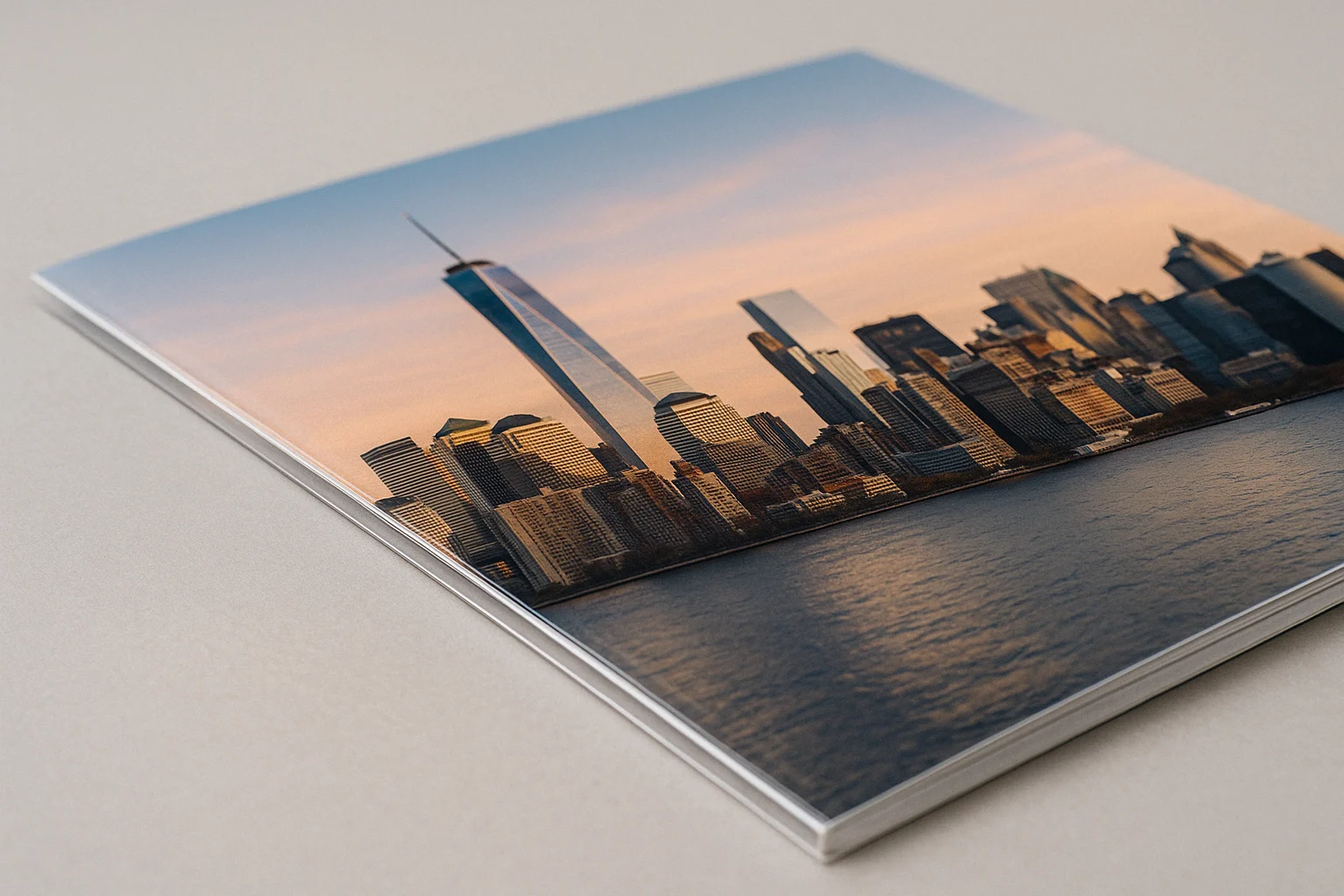
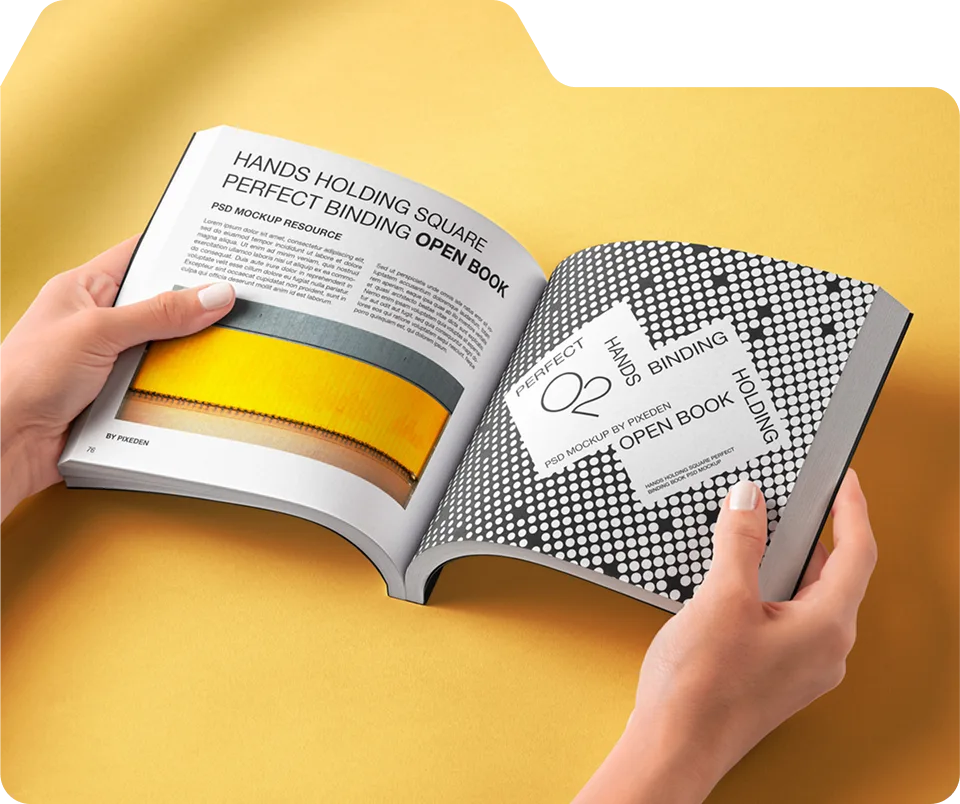
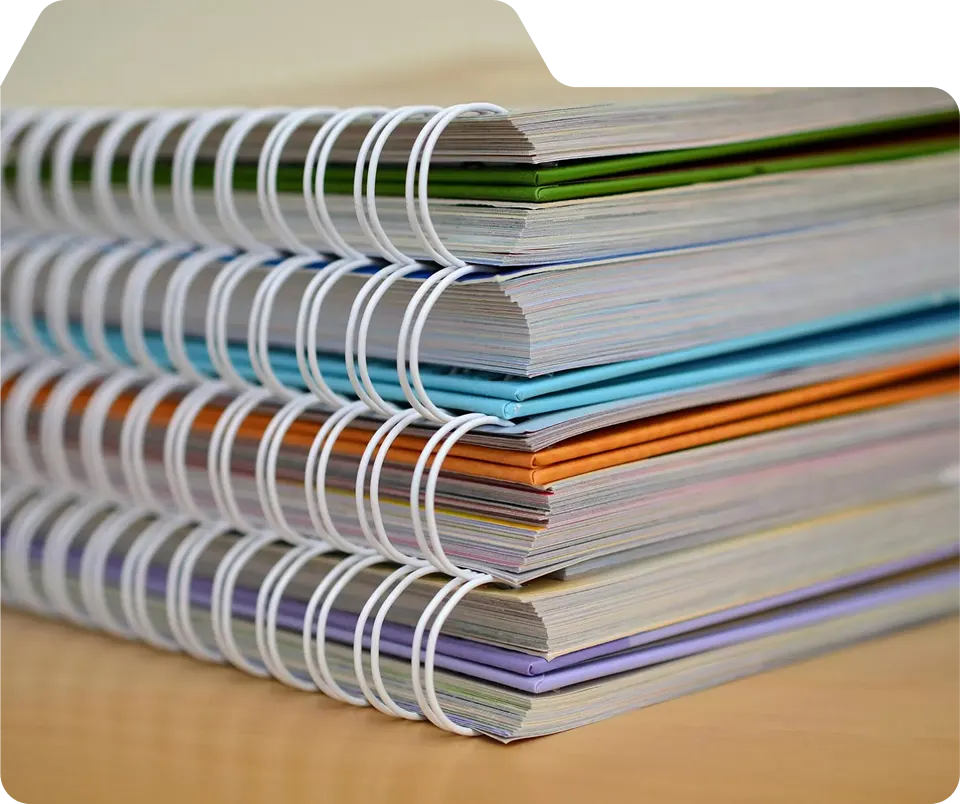
An 8-page saddle-stitched booklet, 5.5″ × 8.5″, on 80 lb. gloss text with a 100 lb. soft-touch laminate cover. This format is physically distinctive — it has heft, structure, and a cover that feels different in the hand. It doesn’t get lost in a stack of flat flyers. Prospects are significantly more likely to open it, read it, and keep it. Ideal for companies with a story to tell, a portfolio to show, or a multi-service offering to present.
Option B — The Premium Postcard (Most Cost-Effective Upgrade)
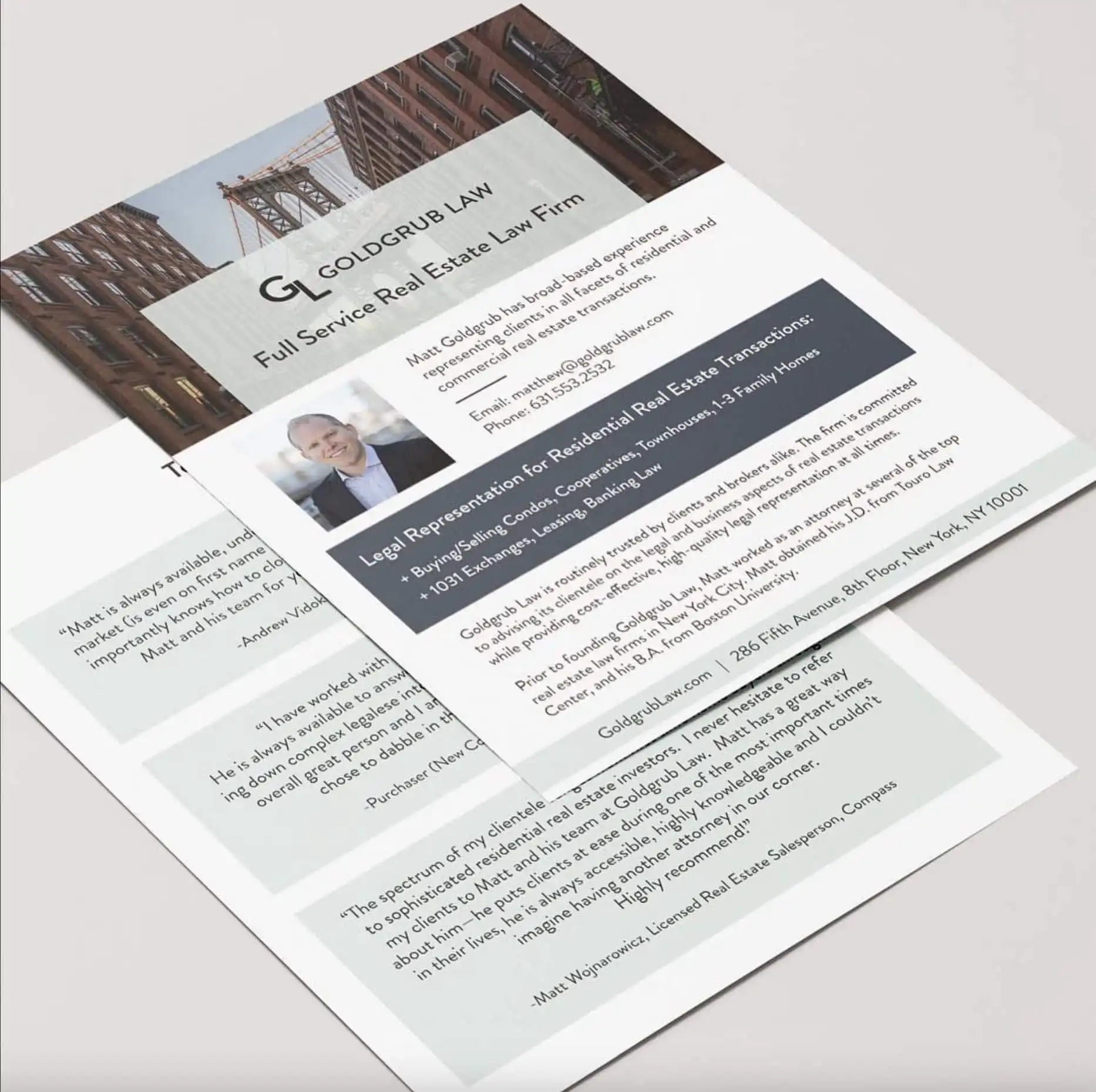
Instead of a standard flyer, a 5″ × 7″ postcard on 16pt card stock with soft-touch or gloss laminate. The rigidity and finish quality immediately distinguish it from a standard printed sheet. Use it for a focused, single-message communication: a special offer, a compelling statistic, a portfolio preview with a QR code. At a fraction of the cost of a full booklet, it delivers a significantly better brand impression than a standard flyer.
Option C — The Two-Tier System (Most Strategic)
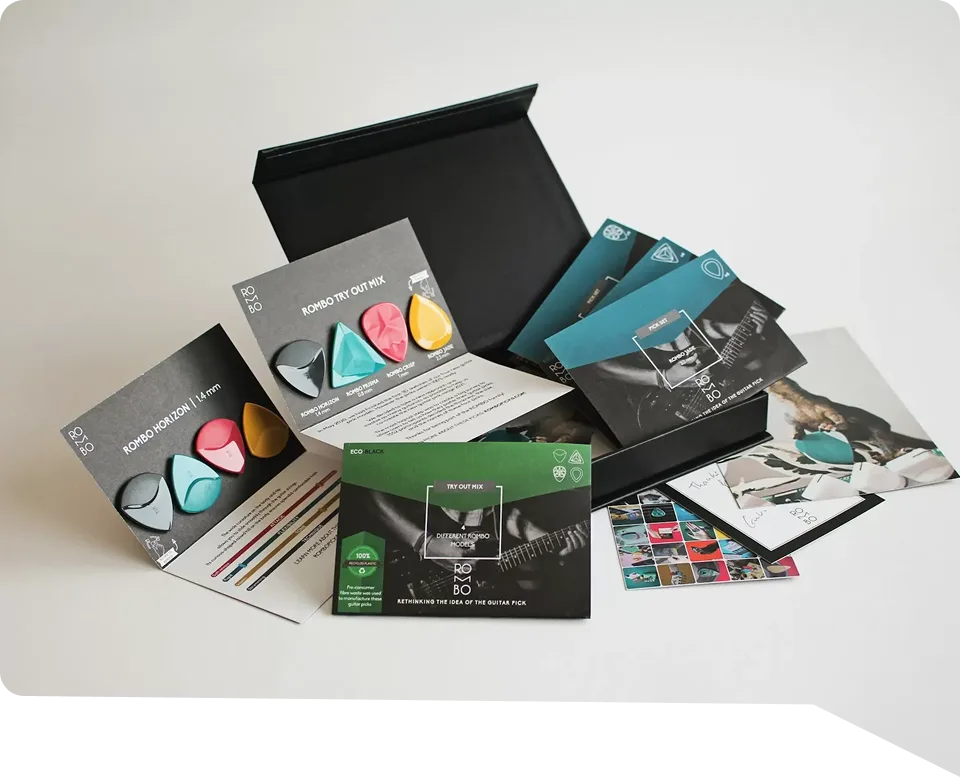
Print a large quantity of a standard flyer for broad distribution (500–1,000 at low cost per unit) and a smaller quantity of a premium booklet for serious prospects (100–200 at higher cost per unit). The flyer captures everyone who stops briefly; the booklet goes to people who represent real business potential. This approach optimizes both reach and impression quality simultaneously.
Print-to-Digital Bridge
A well-placed QR code on a printed trade show piece does something no purely digital interaction can: it captures intent at the moment of maximum engagement — when a prospect is physically holding your brochure, standing at your booth, already interested enough to be there.
What makes QR codes work in print:
- One QR code per piece — one destination. A QR code that leads to your homepage is a wasted opportunity. A QR code that leads to a trade show-specific landing page with a relevant offer — “Get your free NYC print quote → ” — captures qualified interest immediately.
- Label the QR code with a clear action. “Scan for pricing” or “Scan to see our portfolio” dramatically increases scan rates vs. an unlabeled code. People scan QR codes when they know why.
- Use a URL shortener for tracking. Services like Bitly or a UTM-tagged URL let you track exactly how many people scanned your brochure’s QR code vs. your banner’s QR code — giving you measurable ROI data on your print investment.
- Test every QR code before printing. Test on multiple phone models, in varying lighting conditions. A QR code that doesn’t scan reliably on a printed surface at a trade show does nothing — and makes your brand look careless.
- Design the QR code with sufficient quiet zone. The white space around the code (the “quiet zone”) must be maintained at printing — do not allow design elements, text, or color fills to encroach within 4 units of the code boundary or scanning reliability will suffer.
Best placements in a trade show print strategy: Back panel of brochure (primary CTA) · Bottom of retractable banner (for serious prospects who approach close enough to scan) · Business card back (links to digital portfolio or LinkedIn) · Foam board display (links to case study or video)
The 7 Strategies at a Glance
| Strategy | Primary Print Item | Impact Level | Cost Level |
|---|---|---|---|
|
1. Benefit-led backdrop headline |
Booth backdrop |
★★★★★ Highest |
Standard |
|
2. Soft-touch laminate upgrade |
Covers, cards, booklets |
★★★★☆ Very High |
Low upgrade cost |
|
3. Vertical visual hierarchy |
Backdrop + foam boards + table |
★★★★☆ Very High |
Medium (multiple items) |
|
4. Brand color consistency |
All printed pieces |
★★★★☆ Very High |
No extra cost if planned |
|
5. Step-and-repeat banner |
Step-and-repeat backdrop |
★★★★☆ High reach |
Low one-time investment |
|
6. Premium leave-behind |
Booklet or premium postcard |
★★★★☆ High conversion |
Medium per unit |
|
7. Strategic QR codes |
All collateral + display |
★★★☆☆ Measurable ROI |
No print cost |
“The booths that generate the most conversations are never the most complicated. They're the ones where someone made a deliberate decision about every printed piece — what it says, how it feels, and what the person holding it is supposed to do next. That intention is visible from across the aisle.”
— Unique Print NY Production Team
Putting It Together: Budget Allocation by Booth Tier
Not every exhibitor has the same budget. Here’s how to prioritize the seven strategies across three common exhibitor budget levels:
First-Time / Budget Exhibitor
Prioritize Strategies 1, 4, 7
Focus on: One strong retractable banner with a benefit-led headline (Strategy 1) · Consistent CMYK brand colors across all materials (Strategy 4) · QR codes on all pieces (Strategy 7) These three strategies cost nothing extra beyond the base print cost and deliver the highest impact per dollar spent.
Established / Mid-Budget Exhibitor
Add Strategies 2, 3, 6
Add: Soft-touch laminate on brochure covers and business cards (Strategy 2) · Foam board displays for vertical hierarchy (Strategy 3) · Premium mini booklet for serious prospects (Strategy 6) These additions significantly elevate brand impression without requiring a complete booth redesign.
Enterprise / Full Investment
All 7 Strategies
Complete with: Step-and-repeat banner for social reach (Strategy 5) · Full booth backdrop with professional photography · Two-tier collateral system (mass flyer + premium booklet) · QR codes tracked with UTM parameters for measurable ROI This is the complete system — used by the booths that consistently generate the most qualified leads on the NYC trade show circuit.
Frequently Asked Questions
How do I make my trade show booth stand out with print?
The seven most effective print strategies for standing out at a trade show are: (1) use a benefit-led headline on your backdrop instead of just a logo; (2) upgrade covers to soft-touch matte laminate; (3) create a vertical visual hierarchy across your booth with backdrop, foam boards, and table materials; (4) enforce brand color consistency across every printed piece; (5) add a step-and-repeat banner for social media reach; (6) replace generic flyers with a premium leave-behind like a saddle-stitched booklet; and (7) use strategic QR codes to bridge print and digital. Unique Print NY at 242 West 36th Street, New York, NY 10018 helps NYC exhibitors implement all seven strategies — call (212) 420-9198 for a free consultation.
What should I print to make my trade show booth look professional?
For a professional trade show booth, the essential printed pieces are: a branded booth backdrop or retractable banner with a benefit-led headline, a branded table throw, professional business cards on premium card stock with a quality finish, and brochures or a product booklet for serious prospects. Upgrading any of these items with a soft-touch laminate finish and ensuring consistent brand colors across all pieces will immediately elevate your booth’s professional appearance above the majority of competitors.
What is a step-and-repeat banner and why is it useful at trade shows?
A step-and-repeat banner is a large backdrop featuring a repeating pattern of your logo, designed for use as a photo backdrop at events. At trade shows, it ensures your brand appears in every photograph taken in front of it — on LinkedIn posts, Instagram stories, and press coverage from the event. This extends your brand reach far beyond the show floor at no additional cost per impression. Standard sizes are 8′ × 8′ and 8′ × 10′. Unique Print NY at 242 West 36th Street, New York, NY 10018 produces step-and-repeat banners with a 4–6 business day lead time.
What is soft-touch laminate and why should I use it on trade show materials?
Soft-touch laminate is a premium matte laminate applied to printed covers and cards that creates a velvety, suede-like texture. It communicates brand quality through touch before a word is read — one of the most cost-effective brand impression upgrades available in trade show printing. It’s available on brochure covers, business cards, booklet covers, and promotional postcards at Unique Print NY. Call (212) 420-9198 for pricing.
How do I use QR codes effectively on trade show printed materials?
For effective QR codes on trade show print: use one QR code per piece linking to one specific destination (not your homepage — a trade show-specific landing page or offer); label the code with a clear action (“Scan for pricing” or “Scan to see our portfolio”); use a tracked URL to measure scan rates; and test the code on multiple phone models before printing. Maintain the required quiet zone (white space) around the code and keep the printed size at least 1″ × 1″ for reliable scanning.
Where can I get premium trade show printing in NYC for exhibitors?
Unique Print NY at 242 West 36th Street, New York, NY 10018 provides full-service premium trade show printing for NYC exhibitors — including booth backdrops, step-and-repeat banners, retractable banners, brochures, saddle-stitched booklets, foam board displays, business cards with premium finishes, and branded table throws. Located minutes from the Jacob K. Javits Convention Center. Standard turnaround 5–7 business days; rush options in 2–3 days. Call (212) 420-9198 Monday through Friday 9AM to 5PM for a free consultation and quote.
Ready to Build a Booth That Stands Out? Talk to Unique Print NY's team about implementing these strategies for your next NYC trade show. Free consultation, free prepress review, no hidden fees. Located at 242 West 36th Street, minutes from the Javits Center.
Make Your NYC Trade Show Booth Impossible to Ignore
From benefit-led backdrops and step-and-repeat banners to premium booklets with soft-touch covers — Unique Print NY produces every printed piece your trade show booth needs to stand out. Free prepress review on every order. Local pickup near the Javits Center. No hidden fees.
242 West 36th Street, New York, NY 10018 · (212) 420-9198 · Mon–Fri 9AM–5PM
Adam Greenberg
June 30, 2026